

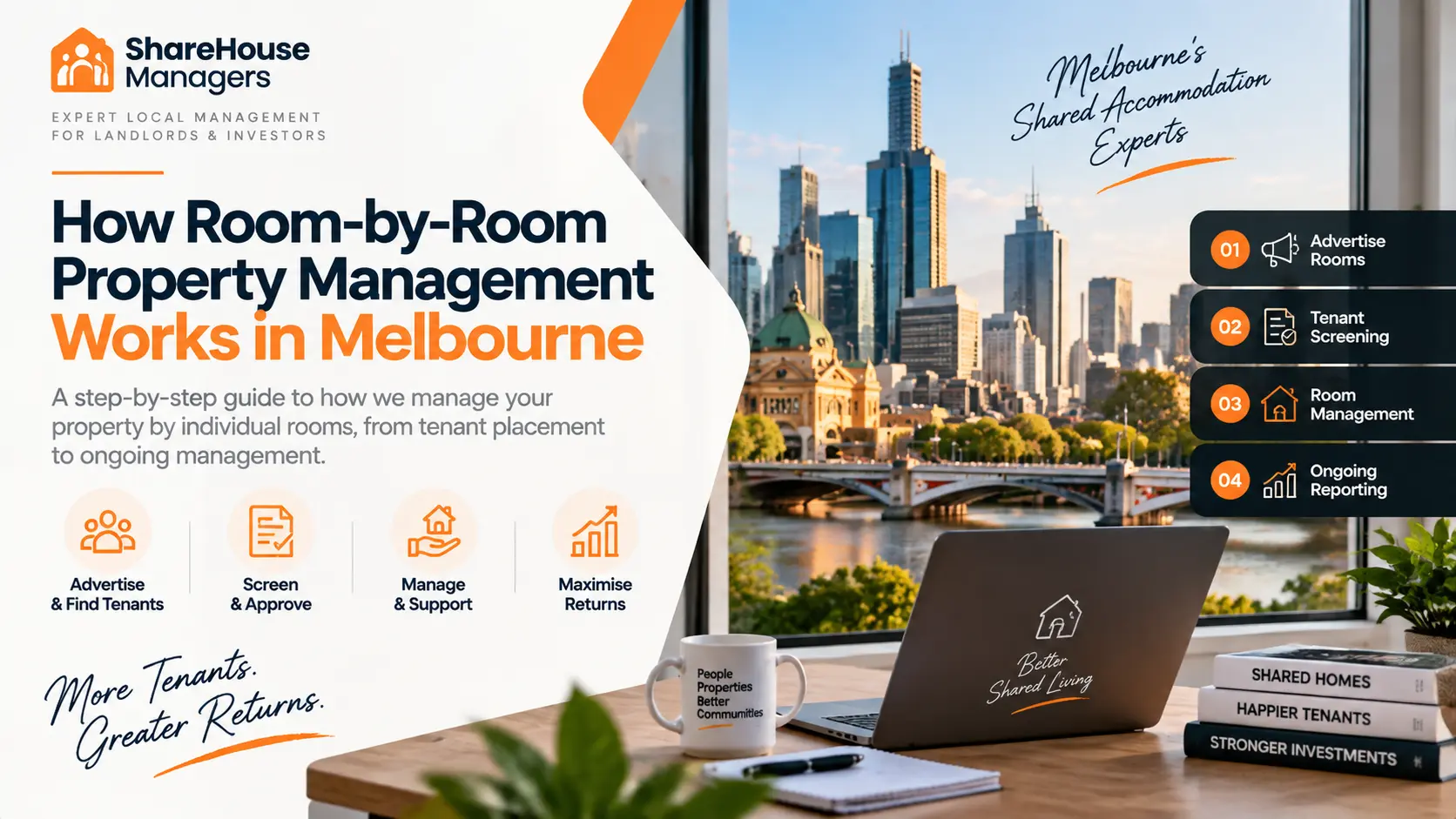
It is important to manage not only each room’s occupancy and condition but also the entire property as a shared living space.
Why does household fit matter? Managing a property room by room is more than listing spare rooms online. It involves a structured process in which each room is part of a larger shared accommodation system. For landlords, this means managing both individual rooms and the property as a whole.
When reviewing each room, the manager considers pricing, tenant fit, move-in dates, rent payments, and the room’s condition. For the whole property, the manager focuses on maintaining a balanced household, managing shared spaces, handling bills and cleaning, managing maintenance, staying compliant, and reporting to the owner.
The first step is to check whether the property is suitable for renting rooms individually. This is not just about how many bedrooms there are. Even if a property has several rooms, it might not work if the layout is awkward, shared spaces are too small, or compliance issues exist.
Look at each room on its own. Larger rooms, rooms with an ensuite, or those that look better may be worth more than a smaller, standard bedroom. When appraising, consider the room itself, the whole property, and the local market.
A separate appraisal for each room is more helpful than estimating the property’s overall value. This way, landlords can see how each room contributes to the total rental income.
After reviewing the property and rooms, create a clear listing for each available room. Be honest and include all key details. Describe the room, shared areas, what’s included, house rules, and how to apply, all in simple terms.
Room rentals often attract more enquiries than regular rental listings. If you don’t reply promptly and consistently, you might lose good applicants. A clear process helps you filter out unsuitable enquiries early and keep serious applicants engaged.
Handle inspections carefully, especially if people are still living in the property. Respect privacy, choose appropriate times, and ensure the place looks presentable.
When screening tenants for room-by-room rentals, check both whether they can pay the rent and whether they will fit in with the household. Someone might be able to afford the room but still not be a good fit for the current setup.
Before someone moves in, make sure all paperwork is in order. Documents and processes can vary by property, so don’t rely on informal verbal agreements.
Move-in records should include the rent, bond, room condition, house rules, keys, payment details, and contact details for maintenance or emergencies.
Once tenants have moved in, you need to actively manage the property. This includes tracking rent, following up on late payments, handling maintenance, maintaining inspection records, managing shared spaces, communicating with residents, filling vacancies, and reporting to the landlord.
Managing room-by-room rentals works best when you are proactive. If you wait until problems become serious, it often leads to higher costs, more stress, and a greater risk of vacancies.
ShareHouse Managers can review your Melbourne property and explain whether a room-by-room management model may suit the property.
It should begin with a property suitability review and a room-level rental appraisal before rooms are advertised for rent.
Each room needs separate attention to pricing and advertising.
Because residents share spaces, a poor fit can lead to complaints, turnover and avoidable management problems.
Some landlords can, but the workload increases with multiple rooms, separate tenants, shared areas, and compliance requirements.
Melbourne shared accommodation specialist
Enter your name and email to start chatting.