

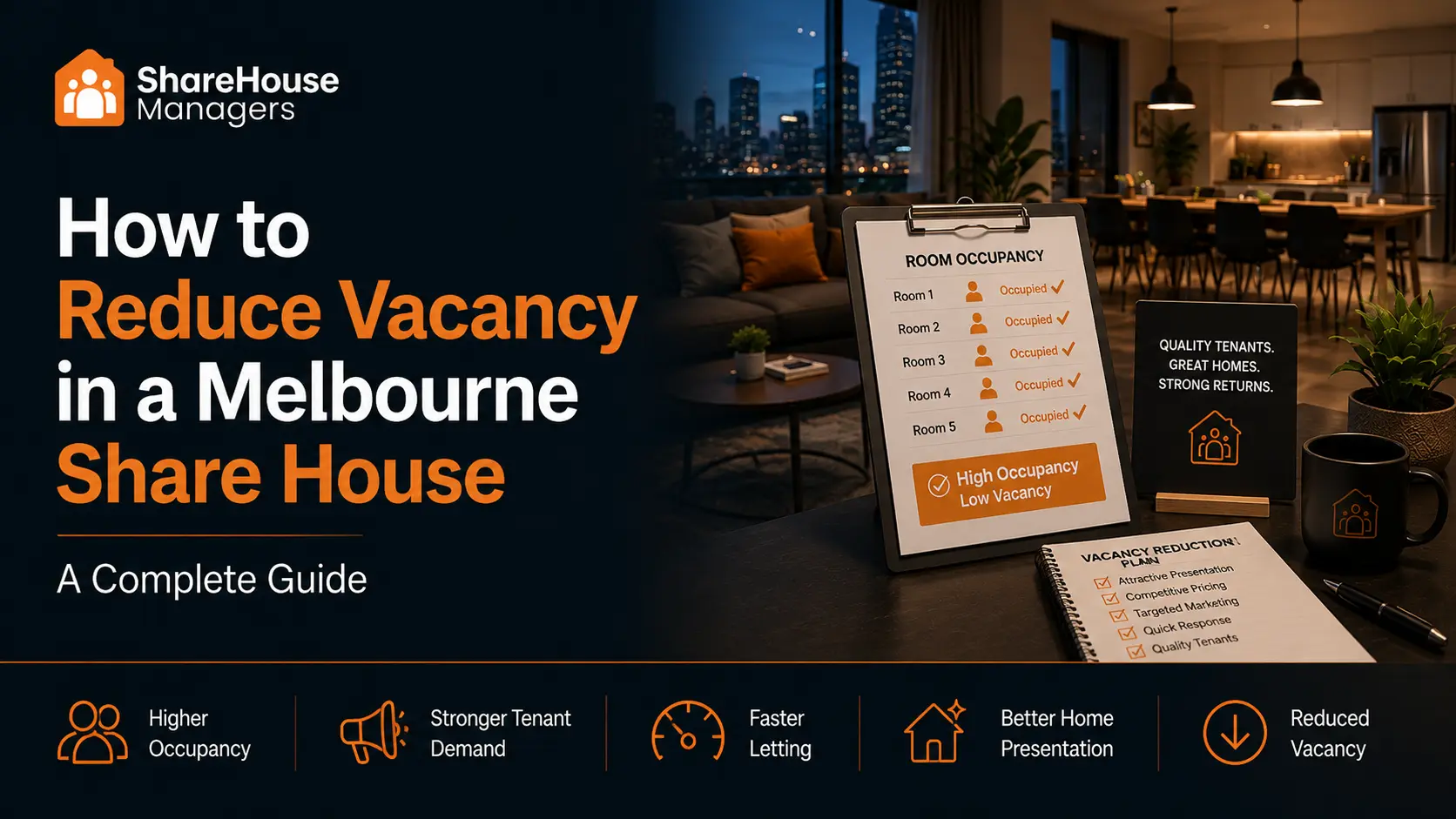
Vacancy is one of the biggest risks in share house management. One empty room can reduce income, create pressure on the owner, and affect the overall household dynamic. Reducing vacancies takes more than posting a room online and waiting for messages.
A strong vacancy reduction system combines realistic pricing, better room presentation, fast enquiry handling, clear listings, reliable screening, and a structured replacement process.
Vacancies can occur for normal reasons, such as a resident moving for work or study. Repeated vacancies usually point to an operational problem.
Presentation affects enquiry quality. Renters compare multiple rooms quickly. A clean, bright, and clearly described room is more likely to attract serious enquiries than a dark or cluttered listing.
Overpricing is one of the fastest ways to create vacancy. Underpricing can reduce returns. The correct price should reflect the room’s value, suburb, household, inclusions, and current demand.
Room renters often contact several listings at once. Slow replies lose suitable applicants. A structured enquiry process keeps response times consistent and reduces missed opportunities.
A listing should filter out poor-fit enquiries while attracting suitable applicants. If the listing is vague, the owner wastes time answering the same questions repeatedly.
Vacancy reduction starts before a resident leaves. Once notice is received, the room should be inspected, prepared, relisted quickly, and matched with suitable applicants.
The best vacancy strategy is not only to fill rooms quickly. It is also to keep suitable residents longer, where possible. Poor maintenance response, unclear rules, and unresolved household conflict can push good residents out.
Melbourne shared accommodation specialist
Before we begin, please share your details so we can help you properly.